Faith as an Effective Tool for Combatting Corruption
On May 8, 2024, the Loyola Centre for Media and Communications (LCMC) hosted a pivotal conference under its Angaza Dialogue Platform (ADP). The focus of the forum was on leveraging faith-based practice as a powerful tool to combat corruption. The event brought together religious leaders, faith-based organizations, and community stakeholders to address the pressing issue of corruption and explore faith-based strategies for its eradication. The forum aimed to highlight the role of religious institutions and individual believers in improving government service delivery through faith practice.
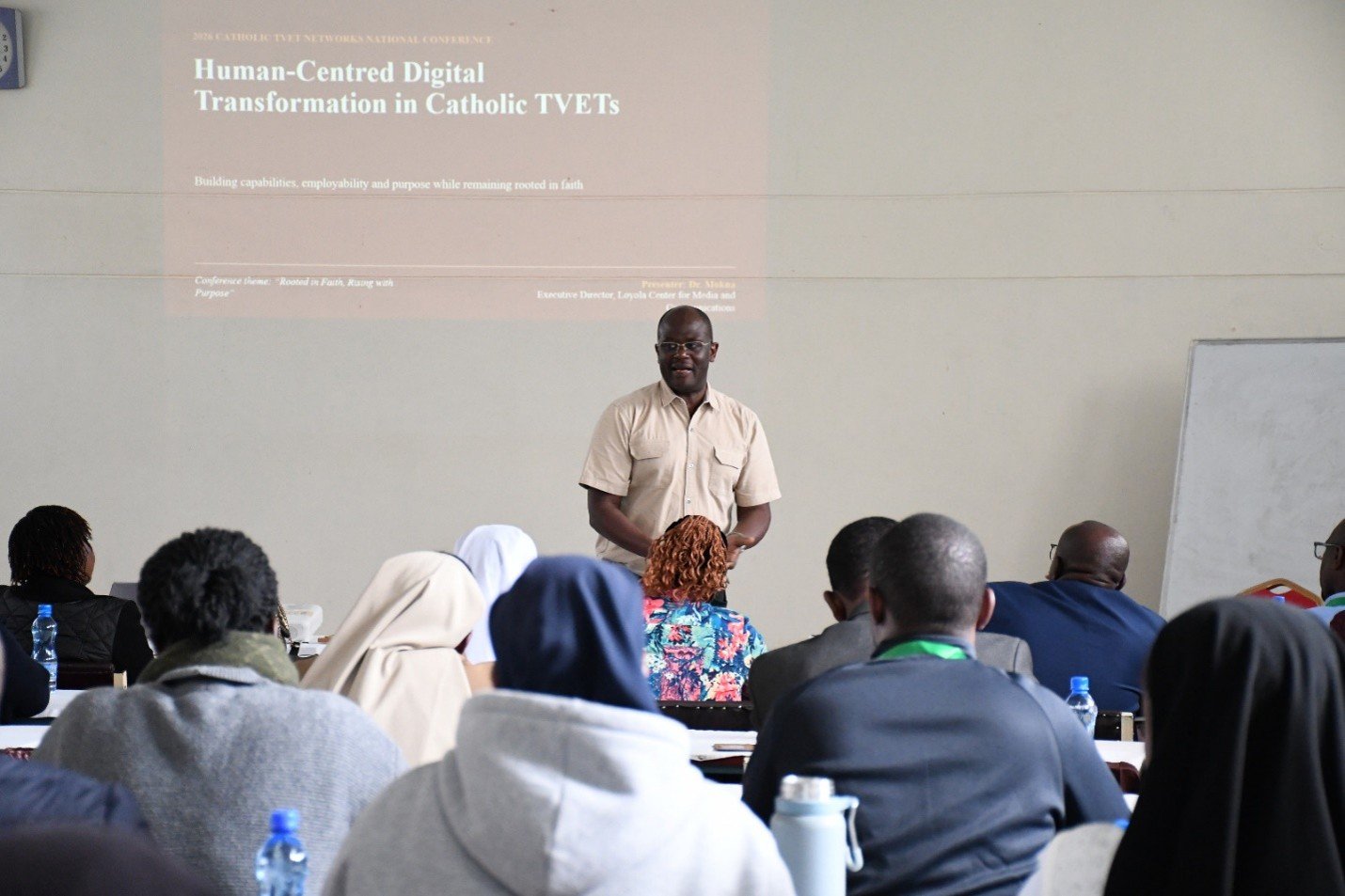
Dr. Elias Mokua,SJ ( the LCMC Executive Director) delivered the opening remarks, setting a comprehensive and insightful tone for the conference. He outlined the primary objectives of the conference, which were:
“Faith is a powerful tool for combatting corruption, shaping consciences, strengthening integrity, and inspiring believers to reject the abuse of power for private gain.”
Increasing Awareness: To highlight the profound negative impacts of corruption on society.
Educating the Faith Community: To encourage the active rejection of corruption within faith circles.
Promoting Transparency: To advocate for open access to information as a means of ensuring accountability and fostering transparency.
Dr. Mokua’s presentation effectively laid the groundwork for understanding the multifaceted nature of corruption and emphasized the importance of integrating faith practices with anti-corruption efforts. His remarks underlined the necessity for both individuals and institutions to engage proactively in combating corruption.
Key Implementation Strategy
The forum explored specific strategy proposed by LCMC to combat corruption, particularly focusing on the role of faith practices:
Moral and Ethical Guidance: Utilizing religious teachings to instill a strong moral compass that resists corruption.
Community Engagement: Encouraging faith communities to actively participate in anti-corruption campaigns and promote integrity within their spheres of influence.
Educational Programs: Implementing faith-based educational initiatives that address the ethical implications of corruption and the virtues of honesty and transparency.
Underlying Assumptions: Dr. Mokua delved into the assumptions necessary for breaking the chains of corruption. He highlighted the central role of faith practice in promoting ethical behavior and moral values, emphasizing the need for individuals to recognize the destructive effects of corruption. He advocated for a future-oriented perspective that prioritizes the welfare of children, stressing the intrinsic link between corruption and the well-being of younger generations.
Understanding Corruption: He defined corruption as the abuse of entrusted power for private gain and provided a nuanced understanding of its various forms and manifestations, including bribery, embezzlement, favoritism, and abuse of discretion. By categorizing corruption based on its scale and nature, he illustrated the complexity of the issue and the necessity for tailored interventions to address its root causes effectively.
Impact in Kenya: The LCMC team using infographics emphasized the severity of corruption in Kenya, outlining its detrimental effects on development, democracy, and social cohesion. The severe corruption diverts investment away from critical sectors, erodes trust in public institutions, and perpetuates inequality and injustice. Dr. Mokua stressed the urgency of concerted action to combat this systemic challenge, underscoring the potential long-term adverse effects if corruption is not effectively addressed.
The Angaza Dialogue Platform forum successfully highlighted the critical role of faith in combating corruption and provided a robust framework for integrating faith practices into anti-corruption efforts. The discussions underscored the importance of moral and ethical guidance, community engagement, and educational programs in promoting integrity and transparency. The forum called for increased collaboration between religious organizations, civil society organizations, and government bodies to tackle corruption and enhance accountability.


Faith as an Effective Tool for Combatting Corruption
On May 8, 2024, the Loyola Centre for Media and Communications (LCMC) hosted a pivotal conference under its Angaza Dialogue Platform (ADP). The focus of the forum was on leveraging faith-based practice as a powerful tool to combat corruption. The event brought together religious leaders, faith-based organizations, and community stakeholders to address the pressing issue of corruption and explore faith-based strategies for its eradication. The forum aimed to highlight the role of religious institutions and individual believers in improving government service delivery through faith practice.
Dr. Elias Mokua,SJ ( the LCMC Executive Director) delivered the opening remarks, setting a comprehensive and insightful tone for the conference. He outlined the primary objectives of the conference, which were:
Increasing Awareness: To highlight the profound negative impacts of corruption on society.
Educating the Faith Community: To encourage the active rejection of corruption within faith circles.
Promoting Transparency: To advocate for open access to information as a means of ensuring accountability and fostering transparency.
Dr. Mokua’s presentation effectively laid the groundwork for understanding the multifaceted nature of corruption and emphasized the importance of integrating faith practices with anti-corruption efforts. His remarks underlined the necessity for both individuals and institutions to engage proactively in combating corruption.
Key Implementation Strategy
The forum explored specific strategy proposed by LCMC to combat corruption, particularly focusing on the role of faith practices:
Moral and Ethical Guidance: Utilizing religious teachings to instill a strong moral compass that resists corruption.
Community Engagement: Encouraging faith communities to actively participate in anti-corruption campaigns and promote integrity within their spheres of influence.
Educational Programs: Implementing faith-based educational initiatives that address the ethical implications of corruption and the virtues of honesty and transparency.
Underlying Assumptions: Dr. Mokua delved into the assumptions necessary for breaking the chains of corruption. He highlighted the central role of faith practice in promoting ethical behavior and moral values, emphasizing the need for individuals to recognize the destructive effects of corruption. He advocated for a future-oriented perspective that prioritizes the welfare of children, stressing the intrinsic link between corruption and the well-being of younger generations.
Understanding Corruption: He defined corruption as the abuse of entrusted power for private gain and provided a nuanced understanding of its various forms and manifestations, including bribery, embezzlement, favoritism, and abuse of discretion. By categorizing corruption based on its scale and nature, he illustrated the complexity of the issue and the necessity for tailored interventions to address its root causes effectively.
Impact in Kenya: The LCMC team using infographics emphasized the severity of corruption in Kenya, outlining its detrimental effects on development, democracy, and social cohesion. The severe corruption diverts investment away from critical sectors, erodes trust in public institutions, and perpetuates inequality and injustice. Dr. Mokua stressed the urgency of concerted action to combat this systemic challenge, underscoring the potential long-term adverse effects if corruption is not effectively addressed.
The Angaza Dialogue Platform forum successfully highlighted the critical role of faith in combating corruption and provided a robust framework for integrating faith practices into anti-corruption efforts. The discussions underscored the importance of moral and ethical guidance, community engagement, and educational programs in promoting integrity and transparency. The forum called for increased collaboration between religious organizations, civil society organizations, and government bodies to tackle corruption and enhance accountability.
Share This:
Related Posts
Who Is a Human in the Era of AI? Dr. Mokua Challenges…
UNICEF Estimates That 20 Million Children Experienced Online Sexual Exploitation or Abuse…
The Future Is Intelligent. Is Your Team Ready? Artificial intelligence is no…
Don’t make children feel like Failures The mission of Loyola Centre for…
Mombasa’s Young Adults Embrace Digital Careers with Skills in Performance Art and…
Catholic Child Care Leaders Showcase Photography Skills to Elevate Visual Storytelling In…
AI Training Ushers in a New Era for Parish Communication By Teresia…
From Resistance to Discernment: The Church and AI By Teresia Muia As…
Making of Teenage Servant Leaders By Teresia Muia “Effective communication and conflict…