Inside the Minds of Our Leaders: How Corruption Persists
For some time now, we’ve been grappling with questions about how deeply rooted corruption is in our society. How did it get this bad? How did we reach a point where our leaders seem devoid of conscience, especially when their decisions directly affect the nation’s well-being?
The answer might lie in an old saying: “A fish rots from the head down.” Just as expert toolmakers become one with their instruments, so too have our leaders with their tools of manipulation. These leaders craft policies and systems not for the public good, but for their personal gain. Political gatekeepers, well-versed in exploiting the system, know exactly which channels to tap into, turning them into lucrative streams of income that serve their selfish interests.
They have perfected the art of creating mental “tools” to manage public perception. For years, the government have tried to increase civic engagement, yet it has often done so in ways that overwhelm the public. They present dense, bulky documents, knowing that it is impossible for citizens to process this information within the limited time allocated for public participation. Such schemes are intrinsically suspicious, tailored to benefit a few, even though they claim to work for the greater good. No matter how they try to convince us that time is against them, or that their thoughts are in the country’s best interest, trust has eroded. We can no longer agree.
“A fish rots from the head down. Just as expert toolmakers become one with their instruments, so too have our leaders with their tools of manipulation.”
Another key strategy they use is manipulating the public’s perception of their leadership. They market themselves as thoughtful and forward-thinking, often crafting 3-5 manifestos that seem to benefit the public. But when a leader is genuinely committed to solving problems, shouldn’t they act decisively? Instead, they dwell on past failures, blaming their predecessors rather than charting a new path.
Perhaps their most powerful weapon is the public’s ignorance. Many of us shy away from scrutinizing issues that do not directly benefit us. When the government introduces amendments, claiming they will bring about necessary change, the public often agrees without understanding how these changes will be implemented or on what basis. The lack of public engagement has long worked in the leaders’ favor. However, things are beginning to shift. The recent Finance Bill demonstrations showed that the public is waking up, becoming more informed and interested in political matters.
So, does this mean the public has won this round? Or is it simply a brief victory in a much longer game? What will the leaders’ next move be, and what are they really aiming for?









Inside the Minds of Our Leaders: How Corruption Persists
For some time now, we’ve been grappling with questions about how deeply rooted corruption is in our society. How did it get this bad? How did we reach a point where our leaders seem devoid of conscience, especially when their decisions directly affect the nation’s well-being?
The answer might lie in an old saying: “A fish rots from the head down.” Just as expert toolmakers become one with their instruments, so too have our leaders with their tools of manipulation. These leaders craft policies and systems not for the public good, but for their personal gain. Political gatekeepers, well-versed in exploiting the system, know exactly which channels to tap into, turning them into lucrative streams of income that serve their selfish interests.
They have perfected the art of creating mental “tools” to manage public perception. For years, the government have tried to increase civic engagement, yet it has often done so in ways that overwhelm the public. They present dense, bulky documents, knowing that it is impossible for citizens to process this information within the limited time allocated for public participation. Such schemes are intrinsically suspicious, tailored to benefit a few, even though they claim to work for the greater good. No matter how they try to convince us that time is against them, or that their thoughts are in the country’s best interest, trust has eroded. We can no longer agree.
Another key strategy they use is manipulating the public’s perception of their leadership. They market themselves as thoughtful and forward-thinking, often crafting 3-5 manifestos that seem to benefit the public. But when a leader is genuinely committed to solving problems, shouldn’t they act decisively? Instead, they dwell on past failures, blaming their predecessors rather than charting a new path.
Perhaps their most powerful weapon is the public’s ignorance. Many of us shy away from scrutinizing issues that do not directly benefit us. When the government introduces amendments, claiming they will bring about necessary change, the public often agrees without understanding how these changes will be implemented or on what basis. The lack of public engagement has long worked in the leaders’ favor. However, things are beginning to shift. The recent Finance Bill demonstrations showed that the public is waking up, becoming more informed and interested in political matters.
So, does this mean the public has won this round? Or is it simply a brief victory in a much longer game? What will the leaders’ next move be, and what are they really aiming for?
Share This:
Related Posts
Who Is a Human in the Era of AI? Dr. Mokua Challenges…
UNICEF Estimates That 20 Million Children Experienced Online Sexual Exploitation or Abuse…
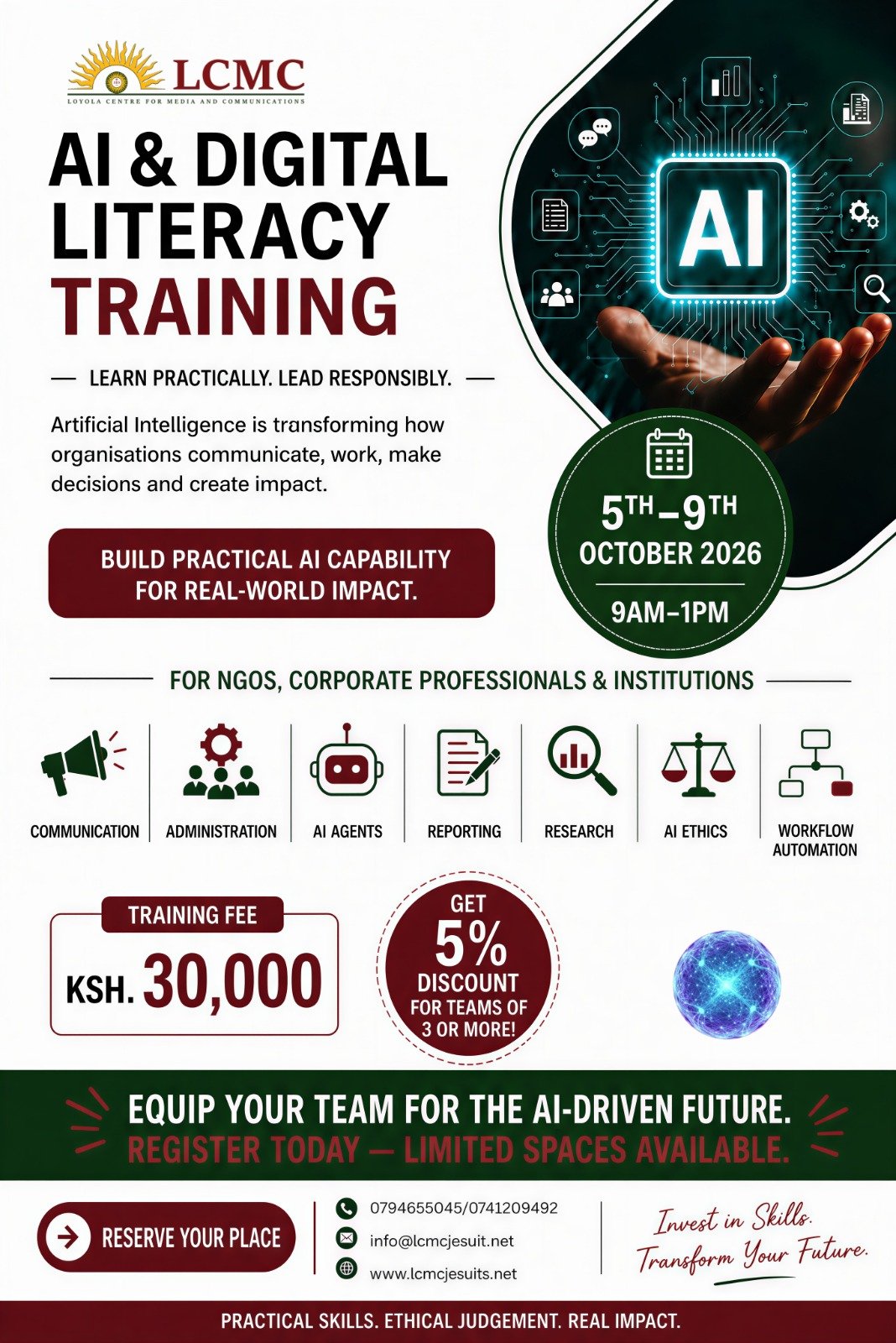
The Future Is Intelligent. Is Your Team Ready? Artificial intelligence is no…
Don’t make children feel like Failures The mission of Loyola Centre for…
Mombasa’s Young Adults Embrace Digital Careers with Skills in Performance Art and…
Catholic Child Care Leaders Showcase Photography Skills to Elevate Visual Storytelling In…
AI Training Ushers in a New Era for Parish Communication By Teresia…
From Resistance to Discernment: The Church and AI By Teresia Muia As…
Making of Teenage Servant Leaders By Teresia Muia “Effective communication and conflict…